
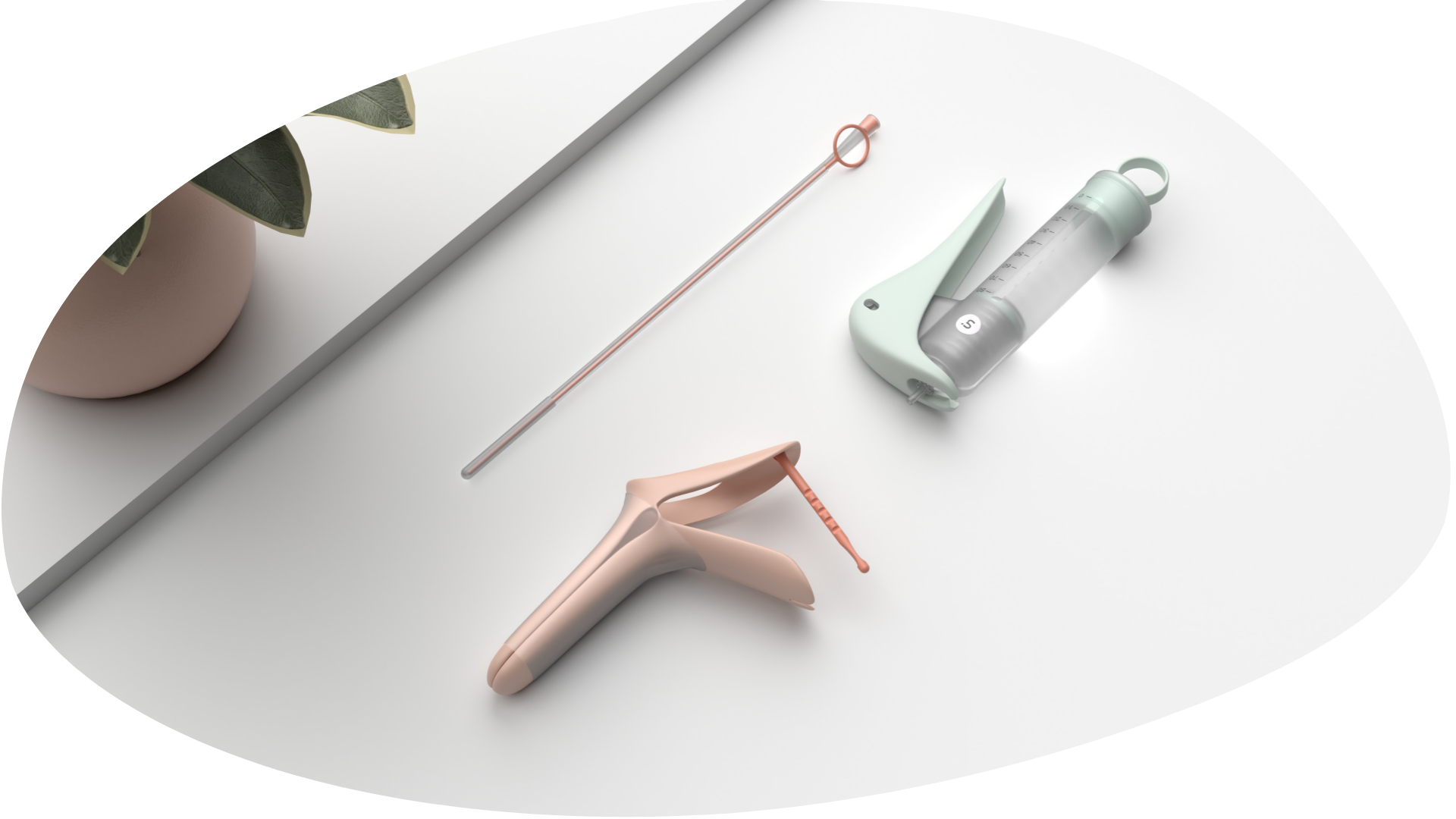
Iola induction catheter
– Under development, planned launch 2029
What is an induction catheter used for?
An induction catheter is a mechanical medical device used to support induction of labor by promoting cervical ripening. It is inserted into the cervix by a trained healthcare professional as part of a medically indicated induction process.
The Iola induction catheter is a single-use device designed for use in obstetric care.
What are the functions of an induction catheter?
Induction catheters are used to support cervical ripening when labor needs to be induced for medical reasons. Mechanical methods are commonly used in obstetric practice as an alternative or complement to pharmacological induction methods.
The catheter applies gentle mechanical pressure to the cervix, which may help prepare the body for labor.
When is induction of labor medically indicated?
Induction of labor may be considered when continuing the pregnancy poses a risk to the mother or the fetus, or when pregnancy has progressed beyond the expected term. The decision to induce labor is made by healthcare professionals based on clinical assessment and established guidelines.
Who uses induction catheters?
Induction catheters are used in clinical settings by trained healthcare professionals, including:
Obstetricians
Midwives
They are used in hospitals and maternity units as part of standard obstetric care.
How does an induction catheter work?
An induction catheter works by being placed through the cervix and gently inflated or positioned to apply pressure. This mechanical stimulation can support cervical ripening by producing prostaglandins, which is an important step in preparing for labor.
Mechanical induction methods do not involve medication and are therefore considered non-pharmacological. If you want to learn more about inducing labor, you can visit National Institute for Health and Care Excellence.
The Iola induction catheter in clinical practice
The Iola induction catheter is designed for use in obstetric care where mechanical cervical ripening is appropriate. It is intended for single use and should be used according to clinical guidelines and instructions for use.
Mechanical induction compared to other induction methods
Mechanical induction methods, such as induction catheters, are one of several approaches used to induce labor. Other methods may include pharmacological agents or combined approaches.
The choice of induction method depends on clinical factors, patient circumstances and local guidelines.
About Induvita
Induvita is founded by a midwife and a gynecologist to improve medical devices used in obstetric and gynecological care, with a focus on safety, functionality, and clinical practice needs. Read more about us here.
FAQ – Iola Induction catheter
-
No. An induction catheter is a mechanical device and does not contain medication.
-
Mechanical induction methods are widely used in obstetric care. Safety depends on appropriate patient selection, correct placement, and clinical monitoring according to established medical guidelines.
-
Yes. In some cases, mechanical induction may be used alone or in combination with other methods, depending on clinical practice and patient needs.
-
The duration varies depending on clinical protocols and patient response. The catheter is typically removed once sufficient cervical ripening has occurred or according to local guidelines. Normal proceduretime is 12-36 hours.